Magnets used outdoors or around water face challenges that standard bare magnets are not designed to handle. Moisture, rain, salt spray, impact, vibration, and repeated contact with painted or finished surfaces can gradually reduce performance or damage both the magnet and the mounting surface.
Rubber coated waterproof magnets provide a practical solution by combining powerful permanent magnets with a protective rubber layer. They offer strong holding force, improved corrosion protection, better grip, and reduced risk of scratching sensitive surfaces.
For industrial equipment manufacturers, marine businesses, sign installers, automotive accessory suppliers, lighting companies, and OEM buyers, rubber coated magnets can provide a reusable and non-destructive alternative to drilling, welding, or permanent adhesives.
What Are Rubber Coated Waterproof Magnets?
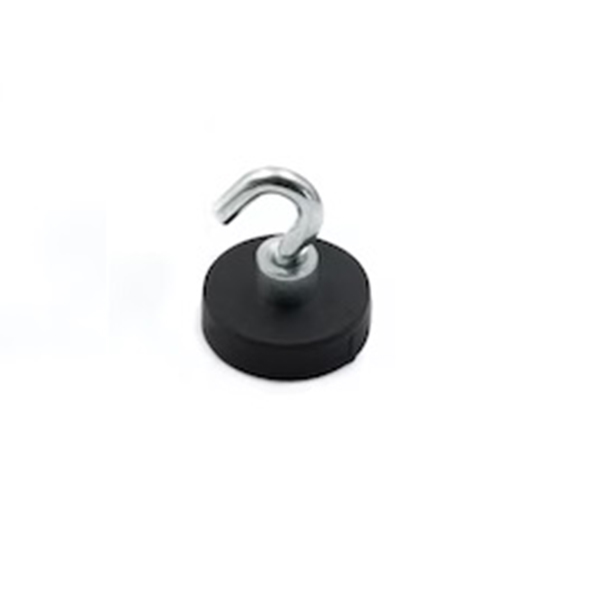
Rubber coated waterproof magnets are permanent magnetic assemblies surrounded by a protective rubber or elastomer coating.
The internal magnetic structure commonly uses neodymium magnets because of their high magnetic strength relative to size. Depending on the design, several small neodymium magnets may be arranged inside a steel structure to concentrate magnetic flux and increase holding force.
The external rubber layer provides several important functions:
Protects the magnet from moisture and environmental exposure
Reduces direct contact between metal components and water
Improves friction on smooth surfaces
Protects painted or polished surfaces from scratches
Provides cushioning against vibration and impact
Improves durability during repeated installation and removal
This combination makes rubber coated magnets particularly useful where magnetic mounting must remain reliable under demanding environmental conditions.
Why Use Rubber Coated Waterproof Magnets?
A conventional neodymium magnet can provide excellent magnetic strength, but its surface protection may become damaged during frequent use. Once moisture reaches the magnet material, corrosion can gradually affect its structure and service life.
A rubber coated magnetic mounting system adds another protective barrier.
Better Moisture and Corrosion Protection
One of the primary reasons to select waterproof rubber coated magnets is their improved resistance to wet environments.
The rubber layer isolates much of the magnetic assembly from direct contact with:
Rainwater
Splashing water
Condensation
Humidity
Mud
Outdoor contaminants
For applications near seawater, buyers should pay additional attention to coating material, sealing design, magnet plating, and metal component materials because marine environments are considerably more aggressive than ordinary outdoor conditions.
High Holding Force
Despite their protective coating, rubber coated magnets can still deliver substantial magnetic holding force.
Neodymium magnetic elements provide high magnetic energy, while an optimized internal arrangement helps concentrate the magnetic field toward the mounting surface.
This allows relatively compact magnetic mounts to support applications such as:
LED lights
Cameras
Signs
Sensors
Antennas
Equipment accessories
Temporary fixtures
The required magnet size should always be selected according to the actual load, mounting direction, safety factor, surface condition, and operating environment.
Scratch Protection
Bare metal magnets can scratch vehicle paint, stainless steel panels, coated machinery, and decorative surfaces.
Rubber creates a soft contact layer between the magnet and mounting surface.
This makes rubber coated neodymium magnets suitable for applications where surface appearance matters, including:
Automotive accessories
Exhibition equipment
Retail displays
Painted machinery
Metal cabinets
Outdoor signs
Users can repeatedly install and reposition equipment without creating the same surface damage associated with exposed steel magnetic bases.
Better Anti-Slip Performance
Rubber does more than protect the surface.
Its higher coefficient of friction can significantly improve resistance to sliding compared with smooth metal-on-metal contact.
This becomes especially important when the load is mounted:
A magnet may have excellent perpendicular pull force but behave differently when subjected to shear force. Rubber coating helps improve friction and therefore contributes to greater mounting stability.
How Do Rubber Coated Waterproof Magnets Work?
The operating principle remains based on magnetic attraction between the permanent magnet assembly and a ferromagnetic surface.
Inside the rubber housing, neodymium magnets may be combined with steel components that help direct magnetic flux toward the contact surface.
When placed against steel, the magnetic circuit creates a strong attraction force.
The rubber layer sits between the magnetic assembly and the steel surface. Although increasing the distance between a magnet and steel normally reduces magnetic force, manufacturers can optimize the magnet arrangement and rubber thickness to balance:
Holding strength + surface protection + environmental durability.
This engineering balance is important when selecting magnets for OEM applications.
Common Types of Rubber Coated Magnets
Rubber coated waterproof magnets are available in different configurations depending on how another component needs to be attached.
Rubber Coated Magnets With Threaded Stud
A threaded stud allows accessories or brackets to be directly fastened to the magnetic base.
Typical applications include:
Work lights
Cameras
Signs
Sensors
Equipment brackets
Rubber Coated Magnets With Internal Thread
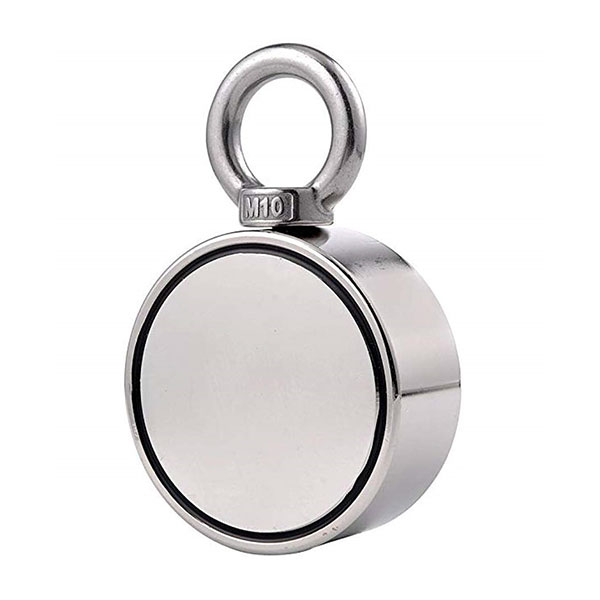
Internal threaded holes provide a clean mounting method for bolts, threaded rods, hooks, or custom hardware.
They are commonly selected for modular equipment where accessories need to be changed regularly.
Rubber Coated Magnets With External Thread
External threaded designs simplify attachment to fixtures containing corresponding threaded components.
They are particularly useful for manufacturing standardized magnetic mounting systems.
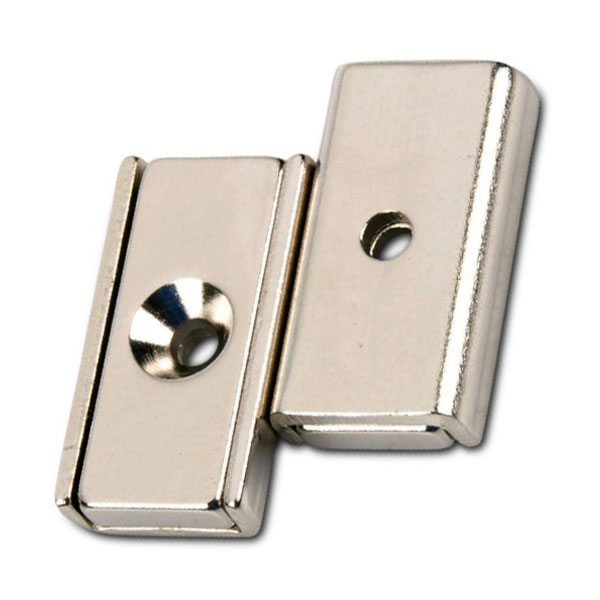
Rubber Coated Magnets With Countersunk Hole
Countersunk magnetic mounts allow screws to sit relatively flush inside the assembly.
These configurations are useful when magnetic components need to be incorporated into:
Housings
Panels
Fixtures
Custom mounting plates
Custom Rubber Coated Magnetic Assemblies
For OEM projects, dimensions, thread types, rubber materials, magnet grades, and mounting structures can often be customized according to the application.
Applications of Rubber Coated Waterproof Magnets
The combination of magnetic strength, water resistance, grip, and surface protection allows these magnets to serve a wide range of industries.
Automotive Applications
Vehicles contain many steel surfaces that provide convenient mounting locations.
Rubber coated magnetic mounts can be used for:
Auxiliary lights
Warning lights
Cameras
Temporary antennas
Sensors
Vehicle signs
Testing equipment
Because drilling is unnecessary, accessories can often be installed, repositioned, or removed without permanent modification to the vehicle.
Marine and Boating Applications
Marine equipment frequently experiences water, humidity, and vibration.
Properly designed waterproof magnetic mounts may be used for temporary mounting of:
Lights
Sensors
Equipment accessories
Signs
Storage fixtures
However, marine applications require careful material selection because continuous saltwater exposure is substantially more corrosive than occasional rain exposure.
Outdoor Lighting
Magnetic mounting can simplify installation of work lights and temporary lighting systems on steel structures.
Applications include:
Construction equipment
Warehouses
Workshops
Agricultural machinery
Utility vehicles
Maintenance operations
Rubber coated magnets allow lighting positions to be adjusted quickly without drilling new holes.
Signage and Displays
Businesses frequently need temporary signs that can be removed without leaving adhesive residue or permanent holes.
Rubber coated magnets are suitable for mounting signs to:
Metal doors
Steel shelves
Vehicles
Machinery
Exhibition structures
The protective coating helps preserve painted surfaces.
Cameras and Monitoring Equipment
Temporary inspection cameras and monitoring equipment often need flexible positioning.
A threaded rubber coated magnetic mount provides a compact way to attach cameras to steel structures during:
Industrial inspection
Testing
Maintenance
Construction
Equipment monitoring
Sensors and Measuring Equipment
Many industrial sensors require temporary or adjustable positioning.
Magnetic mounting allows engineers to reposition equipment without modifying the machine frame.
Common examples include:
Industrial Equipment
Manufacturers can integrate waterproof rubber coated magnets into equipment that requires quick-release accessories.
Examples include:
Cable holders
Tool holders
Equipment covers
Temporary guards
Inspection devices
Fixtures
Identification plates
Rubber Coated Magnets vs. Traditional Pot Magnets
Both products can offer concentrated magnetic holding force, but their operating characteristics are different.
| Feature | Rubber Coated Magnets | Traditional Metal Pot Magnets |
|---|
| Surface protection | Excellent | Limited |
| Scratch resistance | High | Lower |
| Anti-slip performance | High | Moderate |
| Moisture protection | Better | Depends on coating |
| Outdoor suitability | Good with proper design | Application-dependent |
| Direct metal contact | No | Usually yes |
| Repeated repositioning | Excellent | Good |
| Finished surface applications | Highly suitable | Less suitable |
Traditional pot magnets may be preferred where maximum holding force in a compact size is the main priority.
Rubber coated magnets are often preferred where surface protection, friction, environmental resistance, and repeated repositioning are equally important.
Rubber Coated Magnets vs. Adhesive Mounting
Adhesive tapes and industrial adhesives are widely used for mounting lightweight equipment. However, they create several disadvantages in applications requiring frequent adjustment.
Rubber coated magnets provide:
Immediate attachment
No curing time
Easy repositioning
Reusable installation
No adhesive residue
Simple removal
Magnetic mounting is especially useful for temporary installations, prototype equipment, rental equipment, and adjustable accessories.
However, magnets require a suitable ferromagnetic mounting surface, whereas adhesives can bond to a wider range of materials.
Key Factors When Selecting Rubber Coated Waterproof Magnets
Purchasing decisions should not be based only on diameter or advertised pull force.
Several technical variables determine actual application performance.
1. Pull Force
Pull force indicates how much force is required to separate the magnet perpendicular to an ideal steel surface under specific test conditions.
Real applications may produce lower holding force because of:
Thin steel
Painted surfaces
Surface irregularities
Air gaps
Curved surfaces
Load direction
Vibration
A suitable safety factor should therefore be included during product selection.
2. Shear Force
A vertically mounted magnet experiences sliding or shear force rather than pure perpendicular pull.
Rubber coating improves friction, but buyers should still evaluate the actual loading direction.
For heavy vertical loads, multiple magnets or larger magnetic assemblies may be required.
3. Magnet Diameter
Larger diameters generally allow manufacturers to incorporate larger or additional magnetic elements.
Common selection criteria include:
Available mounting space
Required holding force
Accessory dimensions
Weight of equipment
Rather than simply choosing the largest diameter, buyers should optimize size against required performance and system design.
4. Rubber Material
The coating material affects weather resistance, flexibility, friction, and temperature tolerance.
Depending on the application, manufacturers may use materials such as:
Buyers should specify environmental conditions when requesting customized magnetic components.
5. Operating Temperature
Both magnetic material and rubber have operating temperature limitations.
High temperatures can reduce magnetic performance or damage certain elastomers.
Applications around:
should therefore be evaluated carefully before selecting a magnet.
6. Thread Type
Thread configuration affects integration with the final product.
OEM buyers should specify requirements such as:
Internal thread
External thread
Threaded stud
Metric thread
Custom mounting hardware
Providing technical drawings helps reduce compatibility problems during bulk production.
7. Waterproof Requirement
“Waterproof” can describe very different operating environments.
Occasional rain exposure is not equivalent to:
Continuous immersion
Saltwater exposure
High-pressure washing
Chemical exposure
Buyers should clearly communicate the intended operating conditions rather than relying only on a general waterproof description.
What Determines the Holding Force?
One common purchasing mistake is assuming that the rated pull force will always equal the usable holding capacity.
Actual magnetic holding force depends on several variables.
Steel Thickness
Thin steel may not fully absorb the magnetic flux, which can reduce holding performance.
Surface Gap
Paint, powder coating, rubber, dirt, or other materials create a physical gap between the magnet and steel.
Even a small gap can reduce magnetic attraction.
Surface Geometry
Magnetic mounts generally achieve their strongest performance on flat steel surfaces.
Curved or uneven surfaces reduce effective contact area.
Loading Direction
A magnet's perpendicular pull resistance is generally different from its resistance to vertical sliding.
Rubber coating improves friction, but application-specific testing remains important.
Vibration and Shock
Static pull-force specifications do not completely represent dynamic operating conditions.
Equipment installed on vehicles, machinery, or moving structures should therefore use an appropriate safety margin.
Benefits for OEM Product Design
For OEM manufacturers, rubber coated magnets can simplify product design because the magnetic mounting function is integrated into a compact component.
No Drilling Required
Magnetic mounting eliminates the need to drill into existing steel structures.
This is valuable for:
Vehicles
Machinery
Rental equipment
Temporary structures
Finished metal products
Faster Installation
Users can simply position the magnet on a suitable steel surface.
This reduces installation labor and can make the final product more attractive to end users.
Flexible Positioning
Magnetic accessories can be moved as operating requirements change.
For products such as lights, cameras, sensors, and signs, adjustability can become an important selling point.
Reusable Mounting
Unlike many adhesive solutions, magnetic mounting systems can be installed and removed repeatedly.
This helps reduce consumable mounting materials and simplifies maintenance.
Custom Rubber Coated Magnets for Industrial Projects
Standard products are suitable for many applications, but OEM projects frequently require customized specifications.
Typical customization requirements include:
For large-volume projects, suppliers can also evaluate magnetic configurations based on the customer's assembly design.
Providing drawings, samples, load requirements, operating temperature, environmental conditions, and mounting orientation enables the manufacturer to recommend a more appropriate magnetic solution.
How to Source Rubber Coated Waterproof Magnets
Industrial buyers evaluating suppliers should consider more than unit price.
Important supplier capabilities include:
Magnetic performance control
Consistent magnetic strength is essential for production applications. Suppliers should maintain control over magnet material, assembly, and holding-force testing.
Rubber molding quality
Poor molding can result in exposed metal, inconsistent thickness, surface defects, or premature coating failure.
Thread accuracy
For threaded magnetic mounts, dimensional and thread consistency directly affects assembly efficiency.
Customization capability
OEM customers may require non-standard dimensions, mounting structures, or rubber formulations.
Batch consistency
Products used in equipment manufacturing must maintain stable dimensions and magnetic performance between production batches.
Quality inspection
Depending on the product, inspection can include dimensional checks, appearance inspection, pull-force testing, thread inspection, and coating evaluation.
Questions to Ask Before Ordering
Before purchasing rubber coated waterproof magnets, buyers should provide the supplier with several key application details:
What equipment will the magnet support?
What is the total load weight?
Will the load pull directly away from the surface or slide vertically?
What steel thickness is available?
Is the mounting surface painted or coated?
Will the magnet be used indoors or outdoors?
Will it contact freshwater, seawater, oil, or chemicals?
What operating temperature is expected?
What thread size is required?
What quantity is required for prototype and mass production?
These details allow a manufacturer to recommend a product based on actual operating conditions rather than simply selecting a magnet according to nominal pull force.
Frequently Asked Questions About Rubber Coated Waterproof Magnets
Are rubber coated magnets completely waterproof?
The rubber layer significantly improves protection against moisture, but waterproof performance depends on the complete product structure, molding quality, sealing design, and intended exposure conditions. Products intended for continuous immersion should be specifically engineered and tested for that environment.
Are rubber coated magnets suitable for outdoor use?
Yes. They are commonly used outdoors because the rubber layer helps protect the magnetic assembly and improves grip. UV exposure, temperature, moisture, and chemical conditions should still be considered when selecting the coating material.
Do rubber coated magnets scratch painted surfaces?
The rubber contact layer greatly reduces the risk of scratching compared with exposed metal magnetic bases. However, dirt, sand, or metal particles trapped between the magnet and mounting surface can still cause damage, so the surfaces should be kept clean.
Are rubber coated magnets strong?
When high-performance neodymium magnets are used internally, rubber coated magnetic assemblies can deliver strong holding force relative to their size. Actual performance depends on diameter, magnetic design, steel thickness, surface gap, and loading direction.
Can rubber coated magnets be customized?
Yes. For industrial and OEM projects, manufacturers can often customize dimensions, threads, magnetic force, coating structure, and mounting components according to application requirements.
Can they be used on stainless steel?
Only if the stainless steel grade is sufficiently magnetic. Some stainless steels are strongly magnetic, while others provide weak or virtually no magnetic attraction. The mounting material should therefore be tested before final product selection.
Why is the actual holding force lower than the rated pull force?
Rated values are usually measured under controlled conditions using suitable flat steel. Paint thickness, thin steel, curved surfaces, vibration, gaps, and sideways loading can all reduce real-world holding performance.
Conclusion
Rubber coated waterproof magnets combine strong permanent magnetic performance with surface protection, improved friction, and resistance to moisture. Their ability to provide quick, reusable mounting without drilling or permanent adhesives makes them suitable for automotive equipment, outdoor lighting, sensors, cameras, signs, marine accessories, machinery, and many other industrial applications.
For OEM buyers, the most important consideration is not simply choosing the magnet with the highest advertised pull force. Steel thickness, load direction, operating temperature, surface coating, environmental exposure, thread configuration, and required safety factor all influence real-world performance.
By selecting the right rubber coated neodymium magnet for the actual operating environment—and working with a supplier capable of customized magnetic assemblies—manufacturers can create mounting systems that are durable, flexible, easy to install, and suitable for repeated use.