Neodymium bar magnets are compact rectangular permanent magnets known for delivering exceptionally strong magnetic force relative to their size. Manufactured from neodymium, iron, and boron (NdFeB), these magnets are widely used in industrial equipment, motors, sensors, magnetic separators, electronic products, fixtures, automation systems, and custom magnetic assemblies.
Their rectangular geometry makes them particularly suitable for applications requiring a concentrated magnetic field across a flat surface or a magnet that can be easily integrated into slots, channels, housings, and mechanical assemblies.
For manufacturers and OEM buyers, selecting the right neodymium bar magnet involves more than choosing dimensions. Magnet grade, magnetization direction, coating, operating temperature, tolerance, pull force, and environmental conditions all affect final performance.
What Are Neodymium Bar Magnets?
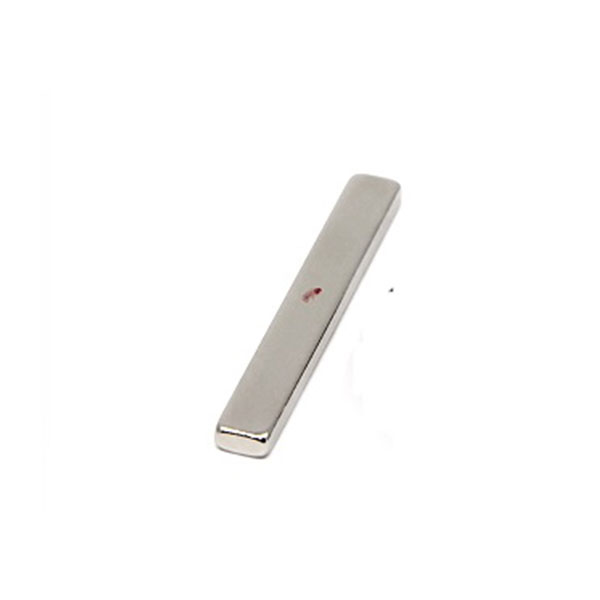
Neodymium bar magnets are rectangular or elongated block-shaped magnets made from NdFeB rare earth magnetic material.
They are often described using related terms such as:
The main difference between a bar magnet and a conventional block magnet is generally its proportion. Bar magnets typically have an elongated rectangular shape, although terminology can vary between suppliers.
Their flat sides and straight edges make them easy to incorporate into mechanical designs where circular magnets may not fit efficiently.
Why Are Neodymium Bar Magnets So Strong?
Neodymium magnets belong to the rare earth permanent magnet family and offer one of the highest magnetic energy densities available among commercially used permanent magnetic materials.
This enables relatively small magnets to generate substantial magnetic force.
The strong performance of neodymium bar magnets comes from several factors:
High magnetic energy product
High remanence
Strong coercivity
Efficient magnetic orientation
Compact magnetic structure
Because a strong magnetic field can be generated within a relatively small volume, equipment manufacturers can reduce component size without sacrificing magnetic performance.
This is particularly valuable in applications where space and weight are limited.
Key Advantages of Neodymium Bar Magnets
High Magnetic Strength
The most significant advantage is their excellent strength-to-size ratio.
A relatively small neodymium bar magnet can generate considerably greater attraction than many similarly sized ferrite magnets.
This allows product designers to create:
Compact Rectangular Design
The elongated rectangular shape allows magnets to fit easily into:
This geometry is particularly useful where magnetic force must be distributed along a straight surface.
Multiple Magnet Grades
Neodymium magnets are available in numerous grades, allowing engineers to balance magnetic strength, temperature resistance, cost, and application requirements.
Common grades include:
High-temperature grades such as H, SH, UH, EH, and AH series may also be available depending on the required operating environment.
Flexible Magnetization Options
Neodymium bar magnets can be magnetized in different directions according to assembly requirements.
Typical configurations include:
Correct magnetization direction is critical because it determines where the north and south poles appear and how the magnet interacts with surrounding components.
Custom Sizes and Shapes
For OEM manufacturing, NdFeB bar magnets can be produced according to custom dimensional requirements.
Customization may include:
This makes them highly adaptable for mass-produced industrial components.
Common Applications of Neodymium Bar Magnets
Because of their magnetic strength and simple geometry, neodymium bar magnets are used across numerous industries.
Electric Motors
Permanent magnet motors are one of the most important applications for NdFeB magnets.
Bar or rectangular magnets may be incorporated into:
Their high magnetic energy helps improve power density and allows manufacturers to build smaller motors while maintaining output performance.
Magnetic Separators
Industrial magnetic separation systems use strong permanent magnets to capture ferrous contaminants from materials.
Neodymium bar magnets may be integrated into:
Magnetic grids
Magnetic filters
Plate separators
Drawer magnets
Magnetic traps
Applications include:
Food processing
Plastics
Chemicals
Pharmaceuticals
Mining
Recycling
Ceramics
Strong NdFeB magnets are especially useful when fine ferrous particles must be removed.
Sensors and Switching Systems
Neodymium bar magnets are often used as magnetic field sources in sensors.
Typical applications include:
Hall effect sensors
Reed switches
Position sensors
Speed sensors
Door sensors
Proximity sensors
The compact size of NdFeB magnets allows them to be integrated into small sensing assemblies.
Automation Equipment
Industrial automation increasingly depends on magnetic positioning, detection, holding, and actuation.
Neodymium bar magnets can be used in:
Robotic equipment
Automated fixtures
Assembly machines
Conveyor systems
Positioning systems
Magnetic couplings
Their repeatable magnetic performance helps support consistent machine operation.
Magnetic Holding Systems
Strong rectangular magnets can provide temporary or permanent holding force for industrial equipment.
Applications include:
For exposed surfaces, magnets may also be incorporated into coated or housed assemblies to improve durability.
Electronics
Neodymium bar magnets are found in various electronic and electromechanical products.
Examples include:
Speakers
Headphones
Smart devices
Magnetic connectors
Switches
Small actuators
Their high magnetic strength enables product miniaturization.
Renewable Energy Equipment
NdFeB magnets are widely used in modern energy systems, particularly permanent magnet generators.
Applications may include:
High magnetic efficiency can contribute to improved power density and reduced equipment size.
Automotive and Electric Vehicles
The automotive industry uses neodymium magnets extensively, particularly as vehicle electrification increases.
Potential applications include:
Traction motors
Electric power steering
Pumps
Sensors
Actuators
Seat motors
Auxiliary motors
Different applications may require specialized high-temperature NdFeB grades.
Understanding Neodymium Magnet Grades
Magnet grade is one of the most important specifications when purchasing neodymium bar magnets.
A grade such as N35 or N52 primarily indicates the maximum energy product of the magnetic material.
In general, higher N grades provide higher magnetic performance.
For example:
| Magnet Grade | Relative Magnetic Strength | Typical Applications |
|---|
| N35 | Standard | General industrial applications |
| N38 | Medium | Sensors and holding systems |
| N42 | High | Motors and automation |
| N45 | Higher | Compact equipment |
| N48 | Very High | High-performance assemblies |
| N50 | Very High | Space-limited magnetic systems |
| N52 | Extremely High | Maximum-strength compact designs |
However, simply choosing N52 is not always the best engineering decision.
Higher magnetic grades may:
Cost more
Have different temperature limitations
Be unnecessary for the required load
Require more careful handling
The correct magnet grade should be selected according to the complete system design.
High-Temperature Neodymium Bar Magnets
Standard neodymium magnets can lose magnetic performance when exposed to excessive heat.
For applications involving elevated temperatures, special magnet grades may be required.
Common temperature classifications include:
| Grade Series | General Characteristic |
|---|
| N | Standard temperature resistance |
| M | Medium temperature resistance |
| H | Higher temperature resistance |
| SH | Superior high-temperature resistance |
| UH | Ultra-high-temperature applications |
| EH | Extremely high-temperature applications |
| AH | Specialized high-temperature environments |
Actual maximum operating temperature depends on grade, magnet geometry, magnetic circuit, and operating conditions.
Buyers should therefore provide the supplier with both:
continuous operating temperature and possible peak temperature.
This is especially important for magnets used in:
Magnetization Direction of Neodymium Bar Magnets
Magnetization direction is frequently overlooked during purchasing but is essential to product performance.
Magnetized Through Thickness
This is one of the most common arrangements.
The north and south poles are positioned on the two largest flat surfaces.
It is suitable for:
Holding applications
Magnetic assemblies
Sensors
Mechanical fixtures
Magnetized Through Width
The poles appear on the long side faces.
This configuration may be useful when magnetic interaction is required laterally.
Magnetized Through Length
The poles are positioned at opposite ends of the bar.
This provides a magnetic behavior more similar to the classic representation of a bar magnet.
It can be useful for:
OEM buyers should specify magnetization direction clearly on drawings.
Surface Coatings for Neodymium Bar Magnets
NdFeB material contains iron and is therefore vulnerable to corrosion if left unprotected.
Most commercial neodymium magnets use protective surface coatings.
Nickel-Copper-Nickel Coating
Ni-Cu-Ni is one of the most widely used coatings.
Benefits include:
It is commonly used for indoor industrial applications.
Epoxy Coating
Epoxy coatings can provide improved environmental resistance in certain applications.
They are often considered when magnets may be exposed to:
Care must still be taken to avoid damaging the coating during assembly.
Zinc Coating
Zinc can provide an economical protective finish.
It may be selected for industrial applications where appearance is less important.
Other Protective Options
Depending on the application, manufacturers may offer specialized coating solutions.
OEM customers should tell suppliers about exposure to:
Water
Salt
Chemicals
Humidity
Outdoor weather
Cleaning agents
This allows a more suitable coating system to be selected.
Neodymium Bar Magnets vs. Ferrite Bar Magnets
Both materials are widely used but have different advantages.
| Feature | Neodymium Bar Magnets | Ferrite Bar Magnets |
|---|
| Magnetic strength | Very high | Moderate |
| Size for same force | Smaller | Larger |
| Cost | Higher | Lower |
| Corrosion resistance | Requires coating | Naturally good |
| Mechanical brittleness | Brittle | Brittle |
| Compact applications | Excellent | Limited |
| High-performance motors | Excellent | Suitable for basic designs |
| Temperature characteristics | Grade-dependent | Often stable |
Neodymium magnets are usually preferred when compact size and high magnetic performance are priorities.
Ferrite magnets may be better when low material cost and corrosion resistance matter more than maximum magnetic strength.
Neodymium Bar Magnets vs. Samarium Cobalt Magnets
Samarium cobalt magnets are another type of rare earth magnet.
NdFeB normally provides:
Higher magnetic strength
Lower material cost
Wider availability
Samarium cobalt may provide advantages in:
High-temperature environments
Highly corrosive environments
Applications requiring excellent magnetic stability
The appropriate choice depends on environmental and performance requirements.
Factors That Affect Neodymium Bar Magnet Pull Force
Magnetic force is not determined by magnet grade alone.
Several factors influence actual performance.
Magnet Dimensions
Length, width, and thickness all affect magnetic field characteristics.
Increasing thickness does not always increase pull force proportionally because magnetic circuit saturation may occur.
Magnet Grade
Higher-grade magnetic material typically increases potential magnetic force.
Steel Thickness
When a magnet attracts steel, the steel becomes part of the magnetic circuit.
Very thin steel can limit usable magnetic flux and reduce holding force.
Air Gap
Even a small gap between a magnet and steel can significantly reduce attraction.
Gaps may come from:
Paint
Plastic
Adhesive
Coatings
Dirt
Mechanical tolerances
Contact Area
Flat, smooth steel surfaces generally produce better magnetic contact than curved or uneven surfaces.
Operating Temperature
Elevated temperatures can temporarily or permanently reduce magnetic performance if the magnet exceeds its allowable temperature range.
How to Choose the Right Neodymium Bar Magnet
Industrial buyers should evaluate several specifications before placing an order.
1. Required Dimensions
Specify:
For custom parts, dimensional drawings are strongly recommended.
2. Required Magnetic Strength
Rather than simply requesting the strongest magnet available, determine:
Required holding force
Working air gap
Load direction
Steel thickness
Safety factor
The supplier can then recommend an appropriate magnet grade.
3. Operating Temperature
Temperature requirements help determine whether standard or high-temperature NdFeB material is needed.
4. Working Environment
Specify exposure to:
Water
Humidity
Salt spray
Chemicals
Outdoor environments
This information helps determine the appropriate coating.
5. Magnetization Direction
Clearly define which surfaces should form the magnetic poles.
6. Dimensional Tolerance
Precision equipment may require tighter tolerances than standard commercial magnetic applications.
Tighter tolerances usually increase manufacturing cost, so tolerance should be defined according to actual assembly needs.
7. Production Quantity
Requirements differ between:
Prototype samples
Small production runs
Regular bulk orders
High-volume OEM projects
Providing expected annual volume helps suppliers recommend appropriate manufacturing and tooling solutions.
Custom Neodymium Bar Magnets for OEM Projects
Standard magnets are not suitable for every product design.
For OEM applications, custom neodymium bar magnets can be produced according to application-specific drawings and performance requirements.
Customization may include:
Custom length, width, and thickness
NdFeB magnet grade
High-temperature material
Magnetization direction
Surface coating
Tight dimensional tolerances
Chamfered edges
Special pole arrangements
Matching magnetic assemblies
For larger projects, engineers may also optimize the magnet according to the surrounding steel circuit.
This can potentially achieve the required performance without simply increasing magnet size or selecting the highest grade.
Manufacturing Process of Neodymium Bar Magnets
Understanding the basic manufacturing process can help industrial buyers evaluate supplier capability.
Raw Material Preparation
Neodymium, iron, boron, and other alloying elements are combined according to the required material composition.
Alloy Processing
The material is processed into fine magnetic alloy powder.
Magnetic Alignment
Before pressing, magnetic particles are oriented in a controlled magnetic field.
This alignment is essential for achieving high magnetic performance.
Pressing
The powder is compressed into a dense green body.
Sintering
The pressed component undergoes high-temperature sintering to develop the final magnetic structure.
Machining
Sintered NdFeB is brittle, so components are typically ground or cut to precise dimensions using specialized equipment.
Coating
Protective surface treatments are applied to improve corrosion resistance.
Magnetization
The finished magnets are magnetized using a strong external magnetic field.
Inspection
Depending on buyer requirements, manufacturers may inspect:
Dimensions
Appearance
Magnetic properties
Magnetization direction
Coating quality
Pull force
Quality Control for Neodymium Bar Magnets
For mass-produced equipment, magnet consistency is as important as maximum magnetic strength.
OEM buyers should pay attention to:
Magnetic Performance
Magnetic material should remain within specified performance ranges from batch to batch.
Dimensional Accuracy
Dimensions must remain consistent for automated assembly or precise mechanical installation.
Coating Quality
Poor coating coverage can expose the NdFeB material and increase corrosion risk.
Magnetization Accuracy
Incorrect pole direction can make a component unusable in the final assembly.
Edge Condition
Because neodymium magnets are brittle, edges may chip if machining, transportation, or handling is poorly controlled.
Handling Neodymium Bar Magnets Safely
Strong rare earth magnets must be handled carefully.
Large neodymium bar magnets can attract steel objects or other magnets with significant force.
Proper handling practices include:
Keep strong magnets separated during storage
Avoid uncontrolled impact between magnets
Use spacers for larger magnetic components
Wear appropriate hand protection when necessary
Keep magnets away from sensitive electronic or magnetic devices
Prevent magnets from snapping together
Follow workplace safety procedures for large magnetic assemblies
Neodymium magnets are strong but mechanically brittle. Powerful collision can cause cracking, chipping, or breakage.
Why Magnet Size Alone Does Not Determine Performance
Two bar magnets with identical dimensions may perform very differently.
Differences can come from:
This is why professional buyers should avoid sourcing magnets based only on dimensions and unit price.
For engineering projects, performance specifications are more important than nominal size alone.
What Information Should You Send to a Neodymium Bar Magnet Supplier?
Providing complete information can significantly improve quotation accuracy.
A typical RFQ should include:
If you are unsure about the exact grade, provide the required magnetic force and operating conditions instead. An experienced manufacturer can recommend a suitable material.
Frequently Asked Questions About Neodymium Bar Magnets
Are neodymium bar magnets the strongest permanent magnets?
NdFeB magnets are among the strongest commercially available permanent magnetic materials and offer exceptionally high magnetic energy relative to their volume.
What is the strongest grade of neodymium bar magnet?
N52 is commonly regarded as one of the highest standard commercial N-series grades. However, the strongest grade is not necessarily the best choice for every application because temperature resistance, cost, size, and magnetic circuit design also matter.
Do neodymium bar magnets rust?
Unprotected NdFeB material can corrode because it contains iron. Most magnets therefore use nickel, epoxy, zinc, or other protective coatings.
Can neodymium bar magnets be used outdoors?
They can be used outdoors if an appropriate coating and assembly design are selected. Long-term exposure to moisture, salt, or harsh weather requires careful corrosion protection.
Can neodymium bar magnets withstand high temperatures?
Maximum operating temperature depends on the magnet grade. Standard grades are suitable for moderate temperatures, while H, SH, UH, EH, and other specialized grades are designed for higher-temperature applications.
Can neodymium bar magnets be customized?
Yes. OEM manufacturers can typically customize size, grade, coating, magnetization direction, dimensional tolerance, and other specifications.
Can holes be drilled into neodymium bar magnets?
Finished sintered neodymium magnets are hard and brittle, so conventional drilling can cause cracking or breakage. If holes are required, they should generally be included during professional manufacturing and machining rather than added after production.
How do I determine the correct magnet strength?
Consider the required holding force, working gap, steel thickness, load direction, temperature, and safety factor. Application testing is recommended before mass production.
Conclusion
Neodymium bar magnets provide a powerful and space-efficient permanent magnetic solution for industrial equipment, motors, sensors, automation systems, magnetic separators, electronics, automotive products, renewable energy equipment, and custom OEM assemblies.
Their main advantages include high magnetic strength, compact rectangular geometry, flexible magnetization options, multiple material grades, and extensive customization possibilities.
However, successful magnet selection requires more than choosing the highest grade. Buyers should evaluate dimensions, magnetic force, magnetization direction, operating temperature, corrosion resistance, coating, tolerance, and real working conditions together.
For OEM and bulk purchasing projects, providing detailed drawings and application requirements allows a neodymium magnet manufacturer to recommend a more technically appropriate and cost-effective solution—helping ensure stable magnetic performance throughout the final product's service life.