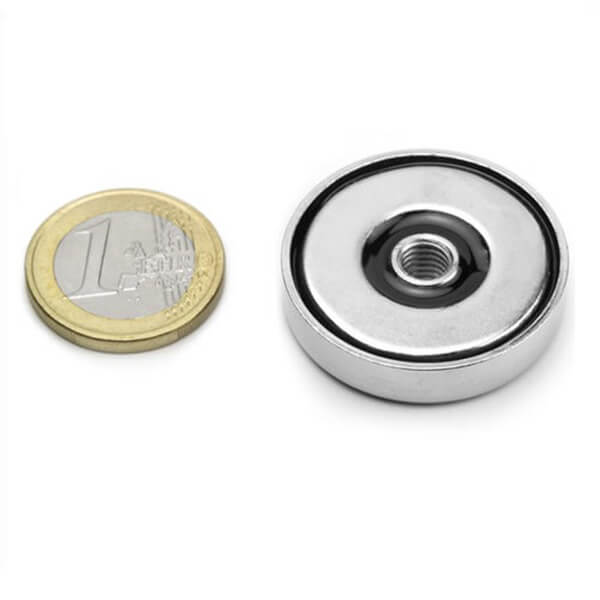
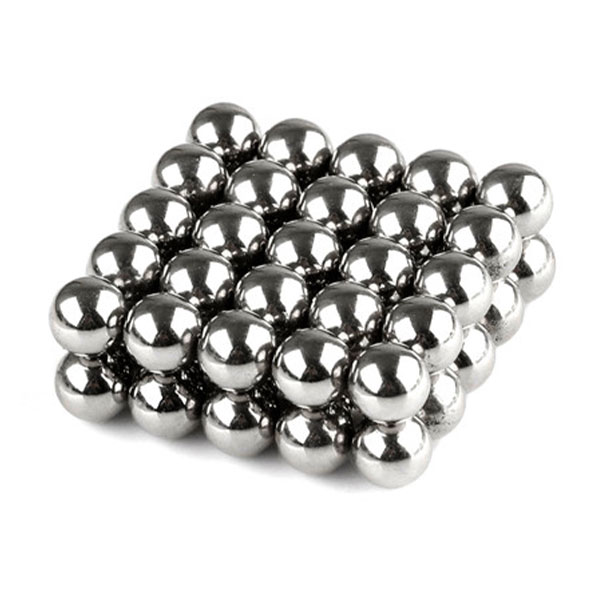
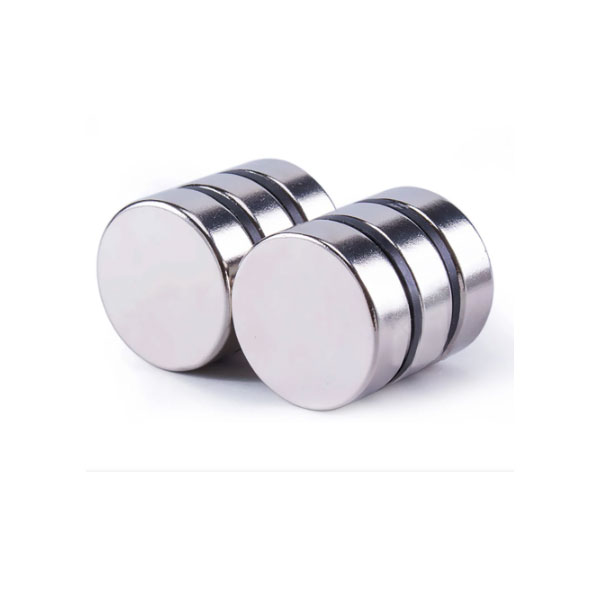
A cow ruminal magnet is designed to remain in the reticulum and capture ferromagnetic metal objects that cattle may accidentally swallow. By holding nails, wire fragments, screws, and other magnetic foreign bodies against the magnet, it can reduce the risk that these objects penetrate the reticular wall and contribute to traumatic reticuloperitonitis, commonly known as hardware disease.
The difficult part for cattle owners is that a ruminal magnet is not normally visible after administration. You cannot simply look at the cow and determine whether the magnet has collected metal.
Instead, several indicators can be used to assess whether the cow ruminal magnet is present and whether treatment is producing the expected response.
What Does a Cow Ruminal Magnet Actually Do?
Before checking whether a magnet is working, it is important to understand what “working” means.
A ruminal magnet does not dissolve, remove, or neutralize metal. Its primary function is to attract ferromagnetic foreign bodies and keep them together in the reticulum. This can reduce the movement of sharp metal objects and lower the risk of further penetration of the reticular wall.
The magnet is normally administered orally and settles in the reticulum, where it can remain for a very long time. In many cattle, a properly administered rumen magnet is intended to remain in the animal rather than be routinely removed.
This means there are actually two different questions:
Is the ruminal magnet still present?
Is the magnet successfully controlling the metal foreign body and associated disease?
These questions should not be confused.
1. Check Whether the Ruminal Magnet Is Still Present
One of the simplest field methods for checking for a previously administered cow magnet is using a compass.
A magnet located in the reticulum can affect the compass needle when the compass is positioned near the appropriate area of the cow's body. A noticeable needle deflection suggests the presence of a strong magnet.
Why does a compass work?
The compass contains a magnetized needle. When it is brought close to another strong magnet inside the cow, the magnetic field can cause the needle to move.
Therefore:
Compass movement → suggests a ruminal magnet is present.
No meaningful movement → may indicate that a magnet is absent, too weak, or not positioned close enough to the checking point.
A compass check is useful as a practical field indication, but it should not be treated as definitive proof that the magnet has successfully captured a specific foreign body.
2. Look for Improvement in the Cow's Condition
When a ruminal magnet is being used as part of treatment for suspected hardware disease, the cow's clinical response is much more important than simply confirming that a magnet is present.
Typical signs of traumatic reticuloperitonitis include:
Reduced feed intake
Reduced rumen motility
Decreased milk production
Mild fever
Abdominal pain
Reluctance to move
Arched or hunched posture
Poorly digested feces
Weight loss in chronic cases
These signs occur because a sharp foreign object can injure or penetrate the reticulum and trigger inflammation or infection.
If treatment is successful, the cow should gradually show the opposite pattern:
Signs of improvement
Appetite returns
Feed intake increases
Normal rumination resumes
Rumen contractions improve
Body temperature returns toward normal
Milk production begins to recover
The cow becomes more willing to walk
Abdominal discomfort decreases
General activity improves
According to the Merck Veterinary Manual, successful conservative treatment is generally associated with normalization of rectal temperature and improvement in eating and rumination within approximately 3–5 days.
However, the exact recovery time depends on the severity and duration of the condition.
3. Check Whether the Cow Is Still Showing Signs of Hardware Disease
A magnet can be present without completely resolving an existing problem.
This is an important distinction.
Suppose a cow has already swallowed a sharp piece of wire. The magnet may capture the wire, but if the wire has already penetrated the reticular wall, the cow may already have inflammation, infection, adhesions, or other complications.
In that situation:
Magnet present ≠ disease completely resolved.
A cow that continues to show:
needs veterinary assessment rather than simply assuming that the magnet has failed.
Hardware disease can progress beyond the reticulum and may involve the abdominal cavity, diaphragm, lungs, or pericardium. Severe cases therefore require more than simply placing a magnet in the animal.
4. Can You Tell if the Magnet Has Picked Up Metal?
This is one of the most common questions about cow ruminal magnets.
Unfortunately, you usually cannot determine the exact amount of metal attached to the magnet from outside the cow.
A compass can help establish that a magnet is present, but it does not tell you:
how many metal fragments are attached;
what type of metal has been captured;
whether a sharp object is completely attached;
whether an object is still penetrating tissue;
whether the magnet has reached a particular foreign body.
The position and orientation of the foreign object also matter. Veterinary references note that magnets are more likely to capture foreign bodies located on the ventral aspect of the reticulum or positioned so that they can make contact with the magnet.
This is why clinical improvement and veterinary diagnostic imaging are more reliable than attempting to judge magnet performance externally.
5. Radiography Can Confirm Whether a Foreign Body Is Attached
For a suspected case of hardware disease, radiography can provide much more information than a simple external magnet check.
X-rays can help identify metallic foreign bodies and determine their location. In some cases, radiographic evidence that the foreign body is attached to the magnet can confirm that conservative treatment is working.
This becomes particularly important when:
the cow is not improving;
fever continues;
abdominal pain persists;
the foreign body is suspected to have penetrated the reticulum;
the animal has already received a magnet;
surgery is being considered.
Ultrasound can also help evaluate inflammatory lesions and changes around the reticulum.
For commercial cattle operations, these diagnostic methods are generally part of veterinary assessment rather than routine farm-level magnet inspection.
6. What If the Cow Has a Magnet but Still Shows Hardware Disease Signs?
This situation does not necessarily mean the cow ruminal magnet itself is defective.
There are several possible explanations.
The foreign body may not be magnetic
Not every swallowed foreign object responds to a magnet. Aluminum and other nonmagnetic materials, for example, are not effectively captured by a conventional magnetic rumen magnet.
The foreign body may not be in contact with the magnet
The effectiveness of a ruminal magnet depends partly on the location and orientation of the foreign body. A magnet cannot reliably capture an object that is physically separated from it.
The foreign body may have already penetrated the reticulum
If a nail or wire has already passed through the reticular wall, simply placing a magnet in the reticulum may not reverse the resulting tissue damage or infection.
Infection may already have developed
Traumatic reticuloperitonitis can cause localized or more extensive infection. In these cases, antimicrobial and anti-inflammatory treatment may be required under veterinary direction.
The magnet may not have been administered correctly
A magnet needs to reach the forestomach and ultimately settle in the reticulum. Improper administration can compromise the intended preventive function.
7. Can a Cow Have More Than One Ruminal Magnet?
This is an area where caution is particularly important.
Do not automatically administer another magnet just because you cannot confirm that the first magnet is working.
Veterinary references specifically advise that only one rumen magnet should be given per animal in the treatment context. Multiple strong magnets can potentially attract through tissue and create serious complications.
If there is uncertainty about whether a cow has already received a magnet, confirm its presence through an appropriate veterinary or field assessment rather than repeatedly administering magnets.
8. Does a Full Magnet Mean It Has Stopped Working?
Not necessarily.
A ruminal magnet can collect multiple ferromagnetic fragments over time. The objective is to keep hazardous metal objects from freely moving through the reticulum and penetrating its wall.
However, there is a practical limitation: if a magnet becomes heavily loaded with metal, its ability to interact with additional foreign bodies may be affected.
This is why prevention remains important even when cattle are routinely given rumen magnets.
A magnet should not be considered a replacement for:
clean feed handling;
safe fencing;
removal of construction debris;
inspection of feed bunks;
removal of broken equipment parts;
appropriate feed-processing controls.
Preventing metal from entering cattle feed is still one of the most effective ways to reduce hardware disease risk.
9. Cow Ruminal Magnet vs. Feed Magnets: What Is the Difference?
These two products serve different purposes.
| Type | Location | Main Function |
|---|
| Cow ruminal magnet | Inside the cow's reticulum | Captures swallowed ferromagnetic objects |
| Feed magnet | Feed-processing or feeding equipment | Removes metal before cattle consume the feed |
| Magnetic separator | Feed processing system | Separates ferrous contamination from feed or ingredients |
A cow ruminal magnet is therefore an animal-level preventive measure, while a feed magnet is an environmental or feed-management measure.
For commercial farms, combining feed contamination control with appropriate ruminal magnet programs can provide a more comprehensive approach to hardware disease prevention.
10. How Long Does a Cow Ruminal Magnet Work?
A properly administered ruminal magnet is generally designed to remain in the reticulum for an extended period and may remain there for the life of the animal.
This is different from products designed to be periodically replaced.
The expected service life therefore depends less on a simple calendar interval and more on:
magnet construction;
magnetic strength;
size and geometry;
resistance to corrosion;
number and type of metal fragments encountered;
cattle management conditions;
the animal's individual risk of foreign-body ingestion.
For manufacturers and bulk buyers, these characteristics should be clearly specified when evaluating different cattle ruminal magnet suppliers.
11. What Makes a Good Cow Ruminal Magnet?
For cattle producers, veterinarians, distributors, and agricultural equipment suppliers, product selection should go beyond simply asking whether a magnet is “strong.”
Important product specifications can include:
Magnetic strength
The magnet needs sufficient magnetic attraction to capture relevant ferromagnetic foreign bodies.
Magnet dimensions
The dimensions should be appropriate for oral administration and intended placement within the reticulum.
Protective coating
Because the product remains inside the animal for an extended period, the external material should be suitable for the intended veterinary application.
Corrosion resistance
A ruminal environment is wet and chemically active. Long-term resistance to degradation is therefore an important consideration.
Smooth surface
A smooth, appropriately finished surface can help reduce unnecessary irritation and facilitate administration.
Structural integrity
The magnet should maintain its physical integrity under long-term exposure to the ruminal environment.
Consistent manufacturing
For distributors and veterinary product manufacturers purchasing in volume, consistency between production batches is critical.
Depending on the application, buyers may also request:
12. Common Signs That Should Not Be Ignored
A cow that has received a ruminal magnet should still be monitored for abnormal clinical signs.
Contact a veterinarian if the animal develops or continues to show:
persistent fever;
sudden loss of appetite;
significant reduction in milk production;
severe abdominal pain;
pronounced hunched posture;
reluctance to move;
grinding of teeth or grunting associated with pain;
marked reduction in rumen activity;
progressive weight loss;
respiratory or cardiovascular abnormalities.
These symptoms can indicate that the underlying problem is more serious than an uncomplicated foreign-body ingestion. Hardware disease can progress to peritonitis, pleuritis, or pericarditis when a foreign body migrates beyond the reticulum.
13. A Practical Cow Ruminal Magnet Monitoring Checklist
For cattle operations, a simple monitoring process can help avoid unnecessary assumptions.
| What to Check | What It Tells You |
|---|
| Was a magnet previously administered? | Establishes whether the animal already has a ruminal magnet |
| Compass response | Can provide an indication that a magnet is present |
| Feed intake | Helps assess recovery |
| Rumination | Indicates improvement in normal digestive activity |
| Rumen motility | Useful clinical indicator |
| Rectal temperature | Helps monitor inflammation/infection |
| Milk production | Useful indicator in dairy cattle |
| Appetite and behavior | Helps identify continued illness |
| Abdominal pain | Important warning sign |
| Radiography | Can identify metal and evaluate its relationship to the magnet |
| Ultrasound | Can assess reticular and surrounding inflammatory changes |
This checklist should support—not replace—professional veterinary examination when hardware disease is suspected.
14. FAQ About Cow Ruminal Magnets
How can I tell if a cow has a ruminal magnet?
A compass can be used as a simple field method to detect the magnetic field of a ruminal magnet. However, a veterinarian may use additional diagnostic methods when disease is suspected.
How do I know if a cow magnet is working?
The strongest practical indication is improvement in the cow's clinical condition, including better appetite, rumination and rumen activity, along with normalization of temperature when treating suspected hardware disease. Radiography can provide stronger confirmation that a foreign body has attached to the magnet.
Can you feel a cow magnet from outside?
External physical examination is generally not a reliable way to determine whether the magnet is present. A compass can provide a practical indication of its presence.
Does a ruminal magnet remove the metal?
No. It captures ferromagnetic metal and holds it in the reticulum. It does not physically remove the metal from the animal.
Can a rumen magnet prevent hardware disease?
It can reduce the risk by trapping ferromagnetic foreign bodies before they migrate or penetrate the reticular wall. However, it cannot eliminate every possible cause of traumatic reticuloperitonitis, particularly nonmagnetic objects or foreign bodies that have already caused penetration.
How long does a cow magnet stay in the cow?
Rumen magnets are generally designed to remain in the reticulum for a long period and often for the life of the cow.
Should I give a second magnet if the cow is still sick?
Do not automatically administer another magnet. Continued clinical signs may indicate that the cow already has tissue damage or infection, or that the foreign body has not been captured. Veterinary evaluation is recommended. Veterinary references caution against giving multiple magnets because of the potential for complications.
Can a ruminal magnet catch aluminum?
No. Conventional ruminal magnets are intended to capture ferromagnetic materials. Nonmagnetic metals such as aluminum are not reliably attracted to them.
Conclusion
A cow ruminal magnet is working when it remains correctly positioned in the reticulum and is able to capture ferromagnetic foreign bodies, helping prevent sharp metal from continuing to injure the reticular wall.
For routine farm monitoring, the most practical indicators are:
Confirm magnet presence → monitor appetite and rumination → monitor rumen activity and temperature → watch for abdominal pain → use veterinary imaging when necessary.
A compass can help determine whether a magnet is present, but it cannot prove that the magnet has captured a particular piece of metal. Likewise, the presence of a magnet does not guarantee that an existing case of hardware disease has been resolved.
For cattle already showing persistent clinical signs, professional veterinary diagnosis is essential. Early evaluation can help determine whether conservative treatment is sufficient or whether additional intervention is necessary.
For buyers evaluating cow ruminal magnets for cattle farms, veterinary supply distribution, or OEM production, magnet strength, dimensions, coating, corrosion resistance, structural integrity and batch consistency should be evaluated together rather than choosing a product based on magnetic strength alone.